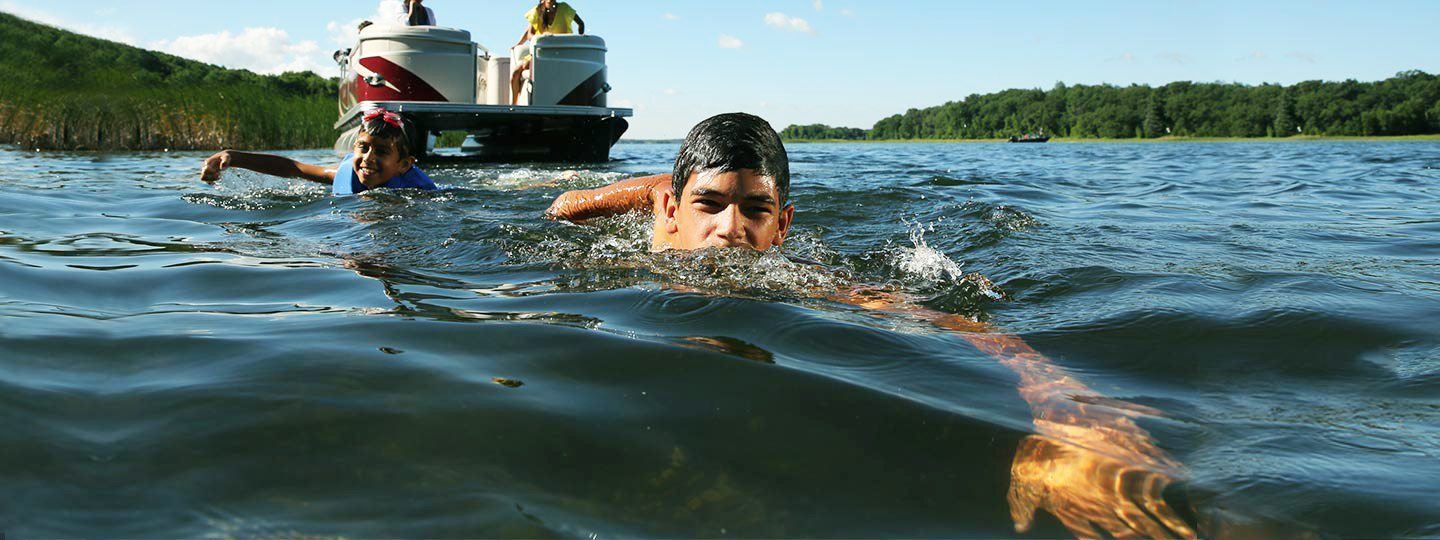

Fishing Safety
Fishing Safety
Follow these tips to ensure a safe fishing experience:
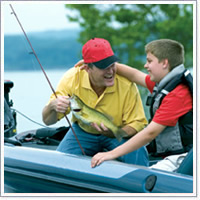 If using a boat to fish, wear your lifejacket or PFD and make sure that your passengers wear theirs, too.
- Inspect waterfronts daily - the natural environment is subject to change without notice.
- Don't fish in areas where it is not permitted. These areas have been declared "off limits" to fishing to protect wildlife, vegetation, or for your safety. When choosing a site for fishing, always consider safety factors. Because fishing is practiced in a variety of environments, evaluate factors specific to safety in each environment.
- Weather is always a factor. Check marine weather forecasts and don't take chances with foul weather.
- Bring along extra safety items such as water, flashlights, maps, and a cell phone or radio.
- Always wear footgear appropriate to the conditions.
- Stay dry, warm, and protected from the elements.Wear a waterproof sunscreen with an SPF (sun protection factor) of at least 15. Wear thin layers of clothing, and progress outward to include water and wind protection as the final layer.
- Use appropriate insect protection measures, including dressing properly and using repellents.
- Keep fishing knives sharp and cover the blade when not in use.
- Handle fish carefully.
- Use safety glasses at all times when casting.
- Use caution when baiting and removing hooks.
Courtesy www.takemefishing.org
See Also
